

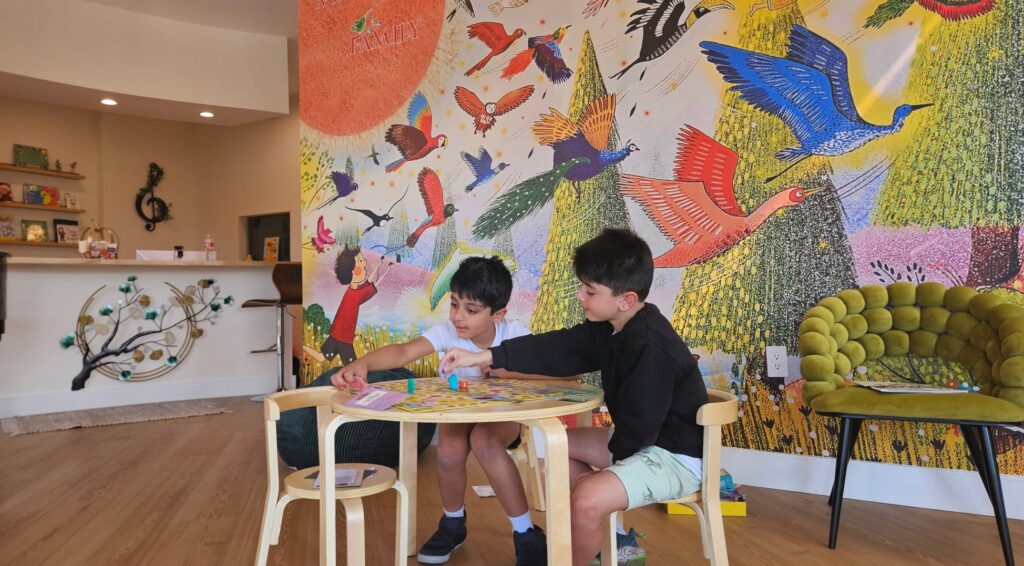
Are Private Lessons Worth It? The Benefits of One-on-One Music Lessons
Picture this: You’re watching a stunning piano performance on stage, fingers dancing across the keys with effortless grace. Or maybe your child has just picked up a guitar for the first time, eyes bright with excitement. Perhaps you’re an adult who’s always dreamed of finally learning to play that instrument collecting dust in the corner. Whatever brought you here, you’re facing the same question that thousands of aspiring musicians grapple with every day.
Should you invest in private music lessons?
It’s not a small question. Private lessons represent a significant commitment—not just financially, but in terms of time, energy, and emotional investment. With countless free YouTube tutorials, affordable apps, and group classes available, is one-on-one instruction really necessary? This article will give you a clear, balanced breakdown of the benefits, costs, and alternatives to help you make an informed decision about your musical journey.
TL;DR: For those serious about structured progress and building a proper foundation, the answer is a resounding yes. Private music lessons offer personalized feedback, accountability, and expert guidance that dramatically accelerates your learning curve and helps you avoid costly mistakes. Here’s the detailed breakdown of why.
The 7 Core Benefits of One-on-One Music Instruction
1. A Personalized Learning Path: Your Pace, Your Goals
One of the most powerful advantages of private lessons is the completely customized curriculum. Unlike group classes or standardized app programs, a private teacher designs each lesson specifically around you. Want to focus on jazz piano instead of classical? Your teacher adapts. Learning more slowly than the “average” student? No problem—your instructor adjusts the pace without judgment. Have a specific goal, like playing at your daughter’s wedding? Your lessons can be laser-focused on that objective.
This personalization extends to your learning style too. Some students are visual learners who need to see demonstrations. Others learn better through verbal explanation or hands-on experimentation. A skilled private teacher identifies how you learn best and teaches accordingly, making every minute of instruction maximally effective.
2. Immediate, Expert Feedback to Correct Bad Habits
Here’s a truth that every experienced musician knows: bad habits are exponentially harder to fix than they are to prevent. When you’re teaching yourself, you might spend months practicing with incorrect hand position, poor posture, or faulty breathing technique without even realizing it. By the time you discover the problem, these habits have become deeply ingrained muscle memory.
A private teacher catches these issues immediately—often in your very first lesson. They’ll notice if your wrist is too high, if you’re gripping the bow incorrectly, or if your embouchure needs adjustment. This real-time correction is invaluable. It ensures that every hour you spend practicing is building proper technique rather than reinforcing mistakes that will limit your progress and potentially cause injury down the line.
3. Unwavering Accountability and Motivation
Let’s be honest: self-discipline is hard. When you’re learning on your own, it’s all too easy to skip practice when you’re tired, to give up when a piece gets challenging, or to let that initial burst of enthusiasm fade into months of inactivity. Life gets busy, excuses pile up, and suddenly your instrument is back in its case gathering dust.
Private lessons change this equation completely. When you have a scheduled appointment with a teacher who’s invested in your progress, you show up. You practice because you know someone will be checking in on your progress. Your teacher provides not just external accountability but also encouragement during frustrating plateaus and celebrates your victories, big and small. This structure and emotional support keeps you moving forward even when motivation wanes.
4. Building a Strong Foundation in Music Theory
Playing notes is one thing. Understanding music is another entirely. A comprehensive music education goes far beyond learning where to put your fingers—it teaches you the language of music itself. This includes reading notation fluently, understanding chord progressions, recognizing intervals by ear, and grasping the underlying theory that makes music work.
Self-teaching methods often skip or minimize these fundamentals because they’re not as immediately gratifying as learning a popular song. But this theoretical knowledge is what separates someone who can play a few memorized pieces from a true musician who can sight-read, improvise, transpose, and deeply understand what they’re playing. A good private teacher weaves theory naturally into your lessons, building this crucial foundation alongside your technical skills.
5. Setting and Achieving Clear Musical Milestones
One of the most discouraging aspects of self-teaching is the lack of clear progression. You might wonder: “Am I actually improving? Should I be further along by now? What should I learn next?” Without expert guidance, it’s difficult to gauge your progress or set appropriate goals.
A private teacher solves this by creating a structured roadmap of milestones tailored to your level. They break down intimidating goals—like playing Beethoven’s Moonlight Sonata—into digestible, progressive steps. Master this scale first. Now work on this simpler piece that teaches the technique you’ll need. Now we’ll tackle just the first section of your goal piece. This systematic approach builds confidence and provides the satisfaction of concrete achievements along the way.
6. Access to Curated Resources and Performance Opportunities
The internet offers an overwhelming abundance of music learning resources, but quality varies wildly. A private teacher acts as your personal curator, recommending the method books, practice techniques, and supplementary materials that are genuinely excellent and appropriate for your level. This saves you from wasting time and money on subpar resources.
Beyond materials, many private teachers also provide something equally valuable: performance opportunities. Whether it’s a casual student recital or a more formal concert, these experiences are transformative. They give you a goal to work toward, help you develop stage presence, and teach you to perform under pressure—skills that benefit you far beyond music.
7. Fostering True Musicianship and Artistry
Here’s where private instruction transcends mere technical competence and enters the realm of artistry. Playing the correct notes at the correct time is just the beginning. True musicianship involves understanding dynamics, phrasing, articulation, and emotional expression. It’s about making interpretive choices and developing your own unique voice as a musician.
These subtle elements of artistry are nearly impossible to learn from a video or app. They require someone with deep musical experience to guide you—to demonstrate the difference between a phrase played mechanically versus one played with feeling, to help you understand what the composer intended, and to encourage you to bring your own personality to your performance. This is where music becomes more than a skill—it becomes a form of self-expression.
Private Lessons vs. The Alternatives: A Head-to-Head Comparison
To help you evaluate your options clearly, here’s how private lessons stack up against the most popular alternatives:
Feature | Private Lessons | Self-Taught (Apps/YouTube) | Group Classes |
Feedback | Instant & Personalized | None / Algorithmic | General / Delayed |
Pace | Fully Customized | Self-Paced (No Push) | Fixed to Group Average |
Cost | Highest ($30-100+/hour) | Lowest / Free | Moderate ($15-40/class) |
Accountability | High | Very Low | Moderate |
Curriculum | Tailored to Your Goals | Disjointed / Self-Directed | Standardized |
Theory Integration | Comprehensive | Minimal / Inconsistent | Basic to Moderate |
Mistake Correction | Immediate | Self-Diagnosis Only | Limited Individual Attention |
Flexibility | Schedule Around You | Complete Flexibility | Fixed Class Times |
Each approach has its place. Self-teaching can work for highly disciplined learners with prior musical experience. Group classes offer a more affordable option and social interaction. But for developing proper technique, receiving personalized guidance, and making efficient progress, private lessons remain unmatched.
The Financial Question: Viewing Lessons as an Investment
Let’s address the elephant in the room: private music lessons aren’t cheap. Depending on your location, the instrument, and the teacher’s experience, you might pay anywhere from $30 to $100+ per hour, with weekly lessons adding up to $120-$400+ per month.
That’s a significant expense, and it deserves serious consideration.
However, it’s important to reframe how you think about this cost. You’re not spending money—you’re investing in something with returns that compound over a lifetime. You’re investing in a skill that brings joy, reduces stress, and provides creative fulfillment for decades to come. You’re investing in cognitive benefits that research has shown include improved memory, enhanced coordination, and better problem-solving abilities. You’re investing in discipline, patience, and the satisfaction of mastering something difficult.
Consider also the hidden cost of self-teaching. Yes, YouTube is free, but what about the value of your time? How many hours will you spend practicing incorrectly, watching unhelpful tutorials, or feeling frustrated and confused? What’s the cost of developing bad habits that take years to unlearn—or worse, cause repetitive strain injuries? When you factor in these hidden costs, the efficiency of private instruction often makes it the more economical choice in the long run.
Many teachers also offer discounted rates for package deals or sliding scale fees based on financial need. The investment is more accessible than many people assume.
Who Benefits Most from Private Music Lessons?
While almost anyone can benefit from private instruction, certain groups find particularly high value in one-on-one lessons:
The Serious Beginner (Child or Adult): If you’re starting from scratch, this is when proper instruction matters most. The foundation you build in your first year of learning will affect everything that comes after. A private teacher ensures you start with correct technique, good practice habits, and a solid understanding of fundamentals—setting you up for success rather than frustration.
The Intermediate Player Who’s Hit a Plateau: You’ve been playing for a while, but you feel stuck. You’re not improving like you used to, and you’re not sure why. This is the perfect time for expert guidance. A skilled teacher can diagnose what’s holding you back, introduce advanced techniques, and push you to the next level in ways that self-teaching simply can’t.
The Aspiring Professional: If you’re preparing for auditions, considering music school, or hoping to perform professionally, private lessons aren’t optional—they’re essential. You need advanced repertoire guidance, audition preparation, professional-level theory, and the kind of rigorous instruction that only one-on-one teaching can provide.
The Hobbyist Who Craves Structure: Maybe you’re not aiming for Carnegie Hall—you just want to play for personal enjoyment. But you want to learn correctly, efficiently, and without the frustration of trial-and-error. Private lessons provide the structure and guidance that make learning genuinely enjoyable rather than a source of confusion and discouragement.
Frequently Asked Questions
What's the best age to start private music lessons?
The ideal age varies by instrument, but generally, children can start piano or string lessons around age 5-7, while wind instruments typically work better for kids 8 and older due to physical development requirements. That said, adults of any age can absolutely benefit from private lessons. Many teachers specialize in adult beginners and understand that older students bring advantages like greater focus, self-motivation, and life experience to their learning.
How often should I take lessons?
For most students making serious progress, weekly lessons are the standard. This provides regular feedback and accountability while giving you enough time to practice between sessions. Some advanced students may take lessons every other week, while young children or absolute beginners might benefit from two shorter lessons per week. Discuss your goals, schedule, and budget with potential teachers to find the right frequency for you.
Are online private lessons as effective as in-person?
Technology has made online lessons surprisingly effective, especially for intermediate and advanced students. You lose some subtleties of in-person observation, but gain convenience, access to teachers anywhere in the world, and often lower costs. For beginners, particularly young children, in-person instruction generally works better for teaching physical technique. Many teachers now offer both options, so you can choose based on your needs.
How long does it take to get good at an instrument with a teacher?
This depends entirely on your definition of “good” and how much you practice. With consistent weekly lessons and daily practice (even just 20-30 minutes), most students can play simple songs within a few months and tackle intermediate repertoire within 1-2 years. Achieving an advanced level typically requires 5-10 years of dedicated study. Remember, music is a lifelong journey—you’ll be enjoying small victories and musical moments from your very first weeks of lessons.
The Verdict: So, Are They Worth It?
After examining the benefits, comparing alternatives, and considering the investment, the answer for most aspiring musicians is clear: yes, private music lessons are absolutely worth it.
The personalized feedback prevents costly mistakes. The accountability keeps you progressing. The structured curriculum builds a solid foundation that serves you for life. The expert guidance accelerates your learning by years compared to self-teaching. Most importantly, private lessons transform the journey from a frustrating, solitary struggle into an enjoyable, supported path toward genuine musical achievement.
Could you learn an instrument without private lessons? Possibly. Will you learn as efficiently, correctly, or completely? Almost certainly not.
If you’re serious about music—whether as a career path or a lifelong hobby—the value of private lessons far outweighs the cost. You’re not just paying for an hour per week. You’re investing in years of joy, a skill that enriches your entire life, and the guidance to reach your full musical potential.
Ready to Start Your Journey With Professional Music Instructors?
The first step is often the hardest, but it’s also the most exciting. Research qualified music teachers in your area or online, read reviews, and don’t hesitate to schedule trial music and piano lessons with multiple instructors to find the right fit. The perfect teacher for you is out there—someone whose teaching style, personality, and expertise align with your goals and learning style.
Your musical journey awaits. All you need to do is take that first step.
Slots are filling up fast at Music Family LA. Reserve your time today!
- FASTEST WAY: Book online 24/7 at musicfamilyla.com.
- TALK TO A HUMAN: Call +1 818-960-1777 during studio hours.
- IN-PERSON: Visit us at 17815 Ventura Blvd Suite 201, Encino, CA.